Skip to:


Search
When Dave* talks about losing his identity, he doesn’t start with the physical documents that disappeared when he was sleeping rough. Or the soul-numbing months trying to prove who he was without them and a fixed address. That comes later.
Dave’s story begins with a different kind of loss. Long before he lost the roof over his head, he had begun to lose his sense of self. And his world spiralled from there.
For years, Dave was surviving rather than living. Struggling to cope in an abusive relationship, drug use and poor mental and physical health had gradually isolated him from friends and family.
“I just gave up. I wasn’t going to work. I wasn’t doing anything. I just completely shut down. I moved off the last bit of savings until eventually I got evicted.”
What followed was not a short period of hardship, but years of instability.
Dave moved between sleeping rough, crisis accommodation and rehabilitation programs. He spent months at a time on the streets, trying to manage complex health challenges, substance dependence and the daily uncertainty of not knowing where he would sleep.
As he reflects on that time, it’s not the homelessness that still hurts most.
“It’s more the upset that you let yourself get there. It’s the hurt that I lost the respect in myself, that I didn’t have the strength and the courage to say no, walk away or stand up for myself.”
Today, Dave tells a very different story.
He has a home. He’s preparing to start work again. He has plans to complete his master’s degree.
But getting here took more than three years, incredible determination, and people who kept believing in him when he couldn’t believe in himself.
Dave’s story isn’t only about a journey out of homelessness. It’s about the power of community, and what becomes possible when people stick by you, even when systems let you down.
When Dave met Chris*, he had no idea the young Kiwi was also homeless, or that Chris would become his best mate and biggest support.
“Chris is the reason that I’m still here today,” he admits. “He’s the most selfless person I’ve ever come across in my life.”
The pair looked out for each other on the streets, sharing information, practical support and encouragement. When Dave was at his lowest, Chris became one of the people who refused to let him give up on himself.
“I was on the streets. I was on drugs. No detox would take me. No rehab would take me,” he recalls.
While out for a walk, Dave heard a random passer-by call him “a f*****g junkie”. It wasn’t the first time – but this time, it made him angry.
“I chose to no longer be the victim. I chose to step up and be my own support. I felt it would make things a lot easier along the way.”
So he detoxed on the streets. It took nine months. Throughout it all, Chris kept showing up. “He just kept pushing me and pushing me not to give up.”
Dave sought out every service that might help him. He recalls being shuttled back and forth between housing providers, hotels, drug and alcohol services, hospitals and police stations.
He soon realised he was expected to manage his own records as he was transferred from service to service – something he found nearly impossible while living on the streets and trying to detox.
“What people might not understand is, you might not have slept for three days. You might have been moved on by police several times. You might have had a drunk person start a fight, or vomit or urinate on you. Then have to find somewhere to clean yourself up. If it’s raining, everyone’s trying to crowd into the same areas.
“Despite all of that, you’re still expected to remember appointments, arrive on time, complete paperwork and continually follow things up. If you miss something, the response can be, “You have to do better.”
“People saying that don’t understand what it took just to get through the previous night.”
Despite being let down by services, Dave remembers the kindness of the people who worked in them.
A doctor who helped him reduce his dependence on drugs, checking in regularly to see how he was going. Police officers from several different stations who brought him food and made near-daily welfare checks. Alcohol and drug workers, case managers, and “four support workers all named Lauren”.
Having those people in his corner helped him keep going. But it was other people experiencing homelessness who became his lifeline.
“Everyone gets to a point where they start pushing each other to engage more, get more help, and find out the little tricks that you share along the way that help everyone move forward a bit better.”
One of the most important ‘little tricks’ was where to go for a good meal. This piece of information led Dave to Sacred Heart Mission’s Dining Hall, where his journey out of homelessness took a major step forward.
There’s another chapter to Dave’s story. Publishing later this month, keep an eye out for ‘Where everybody knows your name’.
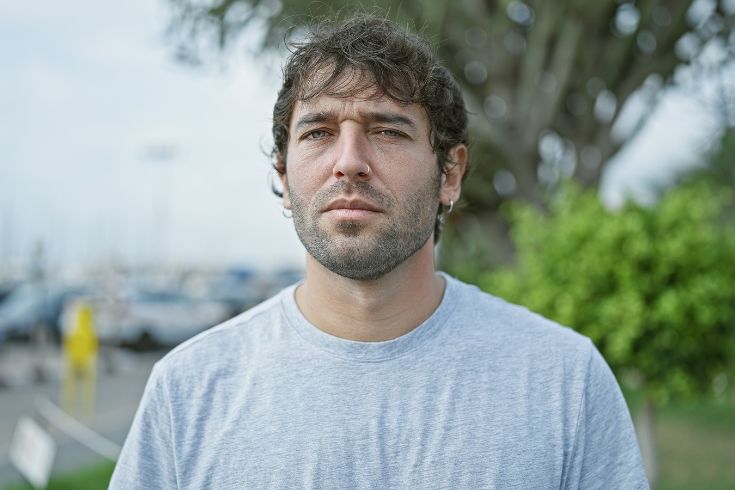
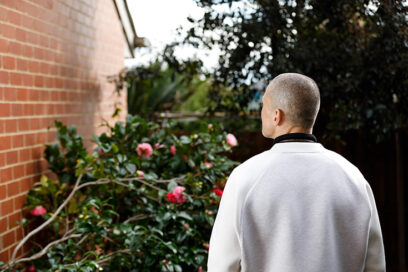
*Some names and the image used in this story have been changed to protect people’s privacy.
Stay up to date with our monthly newsletter, Heartbeat