Skip to:



Search
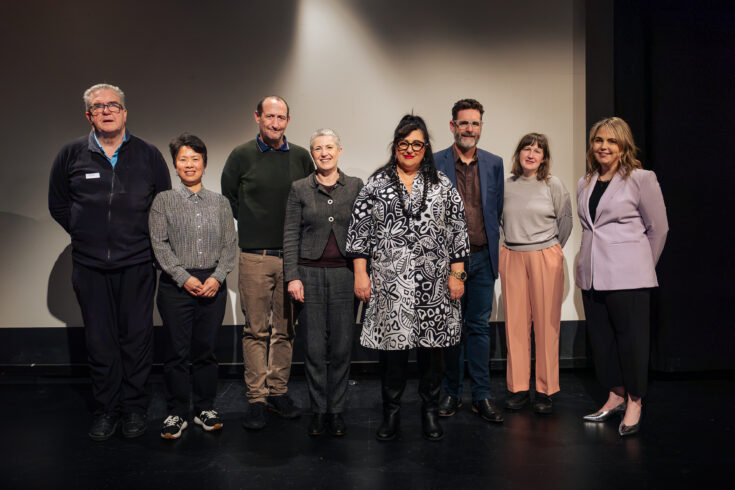
Sacred Heart Mission’s second Advocacy Forum was bookended by two powerful lived experience accounts of homelessness.
Held at RMIT University’s Kaleide Theatre on 26 August, the forum explored the links between community safety and homelessness: a highly topical issue given Victoria’s growing political divide, and new local laws enabling councils to impound the possessions of people sleeping rough.
We began by exploring ‘safety’ from the perspective of those who are least safe.
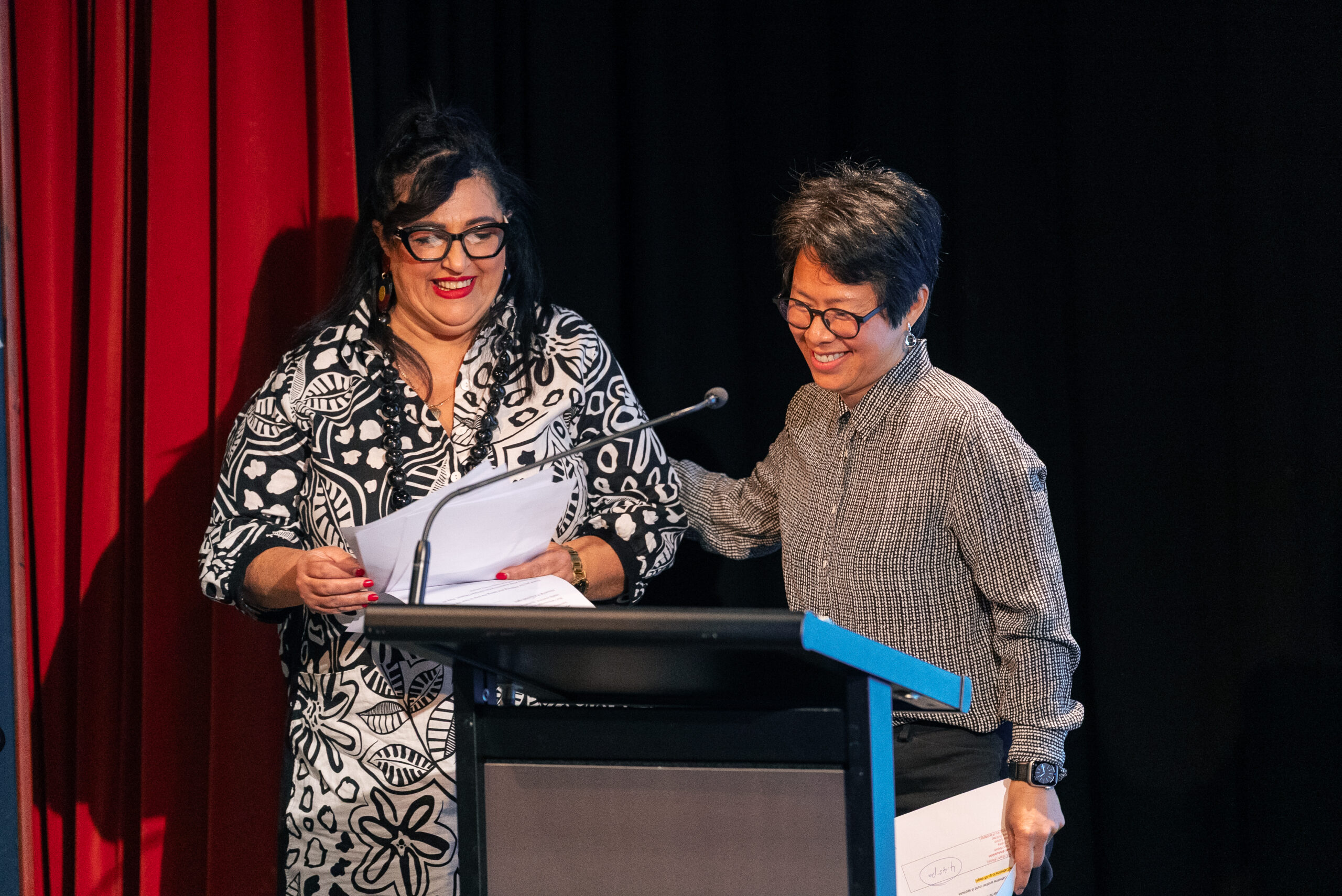
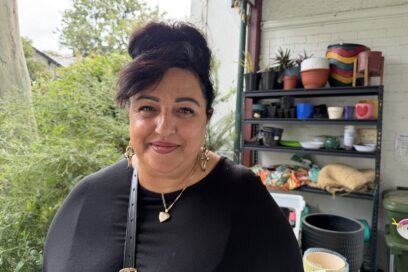
The keynote address was delivered by Catherine Aloise, a founding member of Sacred Heart Mission’s lived experience advisory group.
Catherine first shared a video tour of Sacred Heart Mission’s Women’s House – a place she’s visited for almost 20 years. She followed it with a deeply personal account of being homeless and having “all my worldly possessions” taken away by a local council. Her words helped the audience understand how measures taken in the name of ‘safety’ can make life far more precarious for people without a home.
Our CEO Hang Vo chaired a panel discussion on how to make our communities safer and more inclusive.
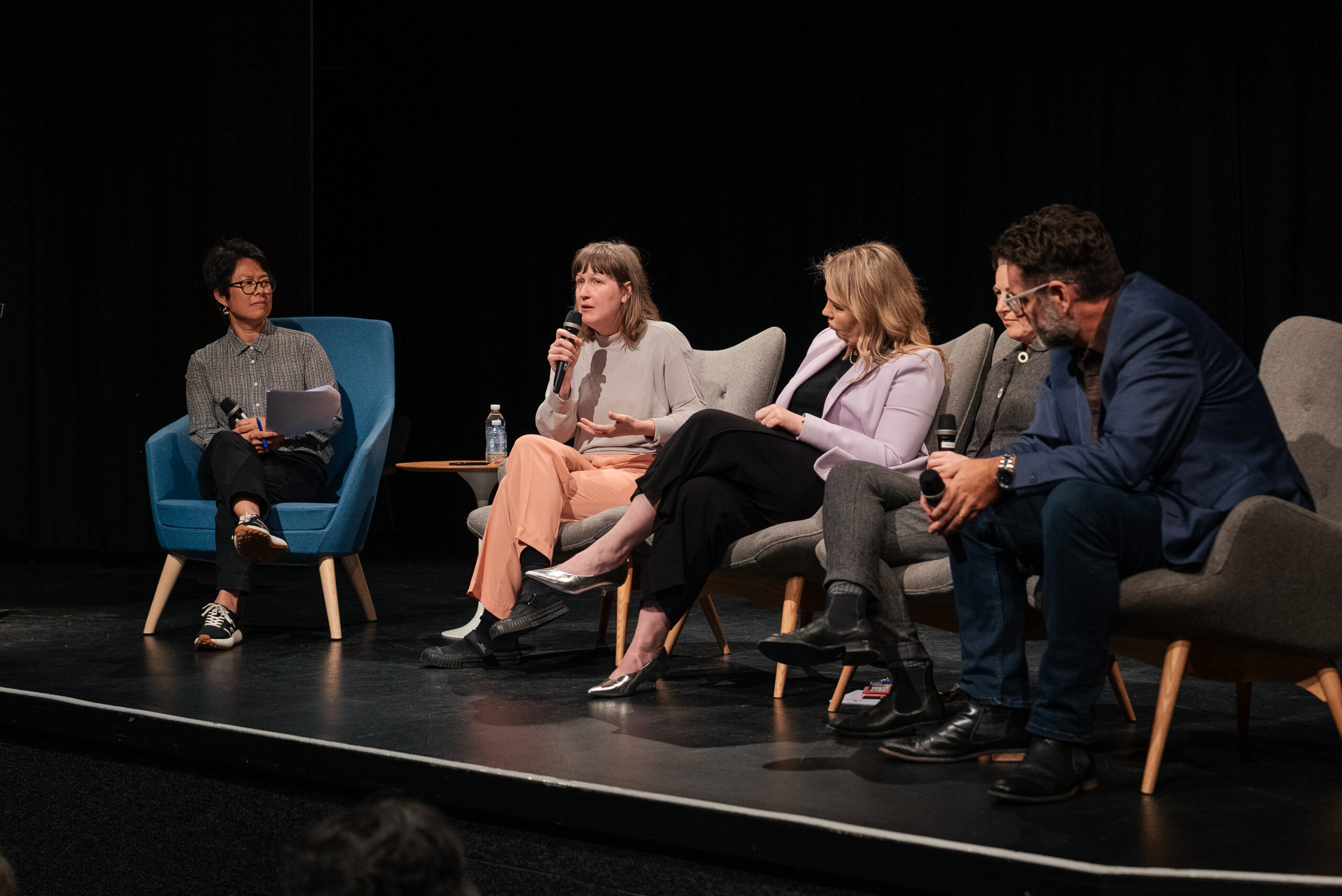
Simon Welsh, co-founder of political consultancy RedBridge, offered insight into how the increasing prevalence and proximity of homelessness is creating deep unease among voters. “What you’re seeing is not a Victoria that’s gotten nastier,” he said. “You’re seeing a government that’s paying the price for not looking after people.”
Jess Richter, a lawyer and policy director at Southside Justice, talked about the “visceral fear” that homelessness stirs in people and how this can trigger enforcement-based responses rather than lasting solutions. “People who feel they work hard and pay council rates often need their public space to look and feel a certain way, whereas people who are unhoused have a direct survival-driven need for that space.”
Kate Colvin, CEO of Homelessness Australia, described homelessness as the result of successive government policy failures. She invited the audience to see through attempts to blame the crisis on individual behaviours or migration rather than years of underinvestment in housing. As she said: “The omelette was cooked a long time ago and now we have a housing crisis. Taking migrants away will not un-cook it.”
Dr Kathryn Daley, Assistant Associate Dean of Research and Policy Studies at RMIT University, highlighted the importance of data insights on homelessness – such as how long people endured homelessness before they presented to a service for help. These insights “make it harder for governments to pass on their responsibility.”
Finally, the panel agreed that homelessness was eminently solvable by collectively dismantling its causes. Kate Colvin outlined a three-step solution: an ongoing commitment to sufficient social housing; ensuring that income support can keep pace with the cost of living; and fair funding for support when people need it.
Jess Richter concurred. “We need to foster the social and economic conditions where people feel secure enough to show grace and share space with people who are different from them.”
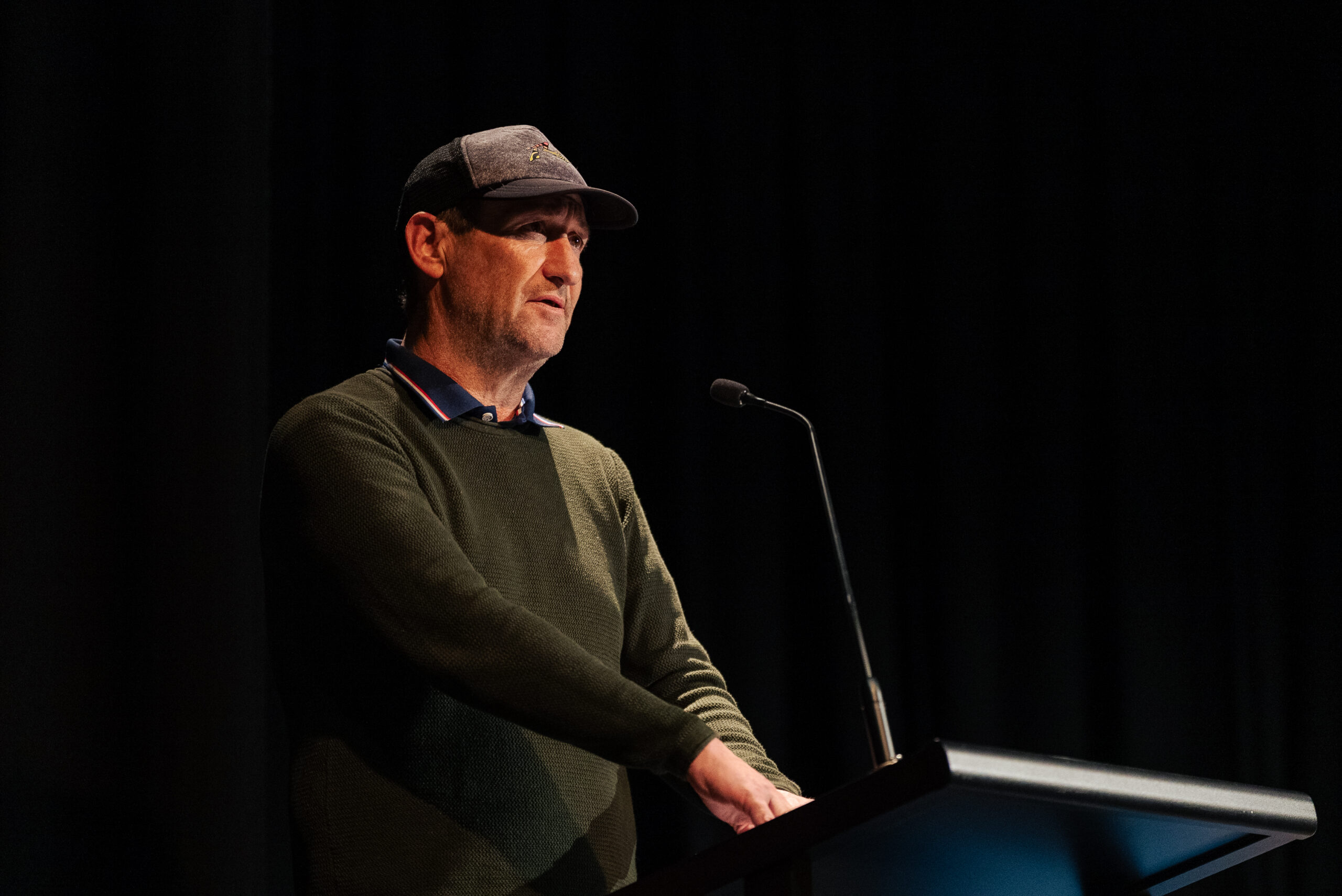
The last word came from Chris Reid, also on our lived experience advisory group.
Chris reflected on how unsafe and unsuitable housing can compound feelings of trauma. “The period immediately after someone is housed can actually be one of the most vulnerable times in their recovery,” he explained. “Nobody hands you an instruction manual on how to rebuild your life. Nobody teaches you how to trust again. Nobody teaches you how to overcome the anxiety of answering the front door.”
Halfway through his speech, a fire alarm forced everyone in the building to evacuate. But his words were so powerful that many people in the audience waited for the firefighters to declare the building safe – just so they could go back in and hear him finish.
Chris asked that we measure success not by the number of people that are housed, but by how many people felt safe in the housing they received. He concluded the forum with an original song about his personal struggles with homelessness, which led to a standing ovation – and discussions about professionally producing his music!
Our heartfelt gratitude goes to:
Stay up to date with our monthly newsletter, Heartbeat